
How to Maintain Safety Nets in Chennai: A Simple Care Guide
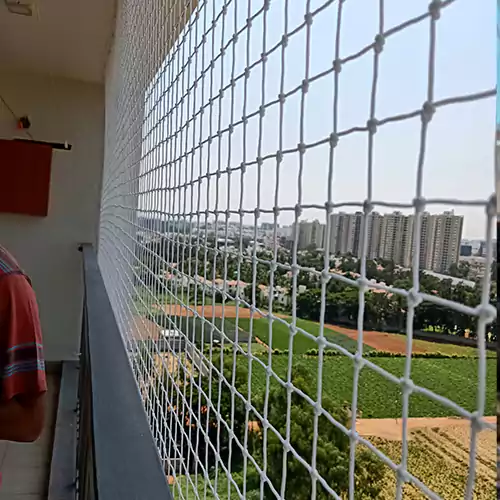
A simple routine keeps a safety net doing its job for years, not just months
A safety net only does its job if it's actually intact and properly tensioned — which is easy to take for granted once it's installed and out of sight. Unlike a lot of home fixtures, a worn safety net doesn't always look obviously wrong from a distance, which is exactly why a simple periodic check matters more here than for most things around your home.
This guide covers a realistic routine — a few minutes every couple of months, with a bit more attention around monsoon season.
Why Maintenance Matters for Safety Nets Specifically
A safety net is a fall-protection product, not just a fixture. UV exposure gradually affects synthetic netting material over years of direct sun, monsoon humidity can weaken anchor points over time, and general wear at friction points (corners, edges, anchor loops) accumulates gradually. None of this happens overnight — but it does mean a net that looked fine on day one can develop weak spots years later if it's never checked.
Your Simple Maintenance Routine
Visual check every 2–3 months
Look for visible tears, fraying, or discoloration across the net's surface.
Anchor point inspection every 6 months
Check where the net is fixed to the wall, floor, or ceiling — these should be firm with no visible looseness.
Gentle tension check once a year
Press gently on the net — it should feel taut without excessive give or sagging.
Deep clean before monsoon
A more thorough clean ahead of heavy rains removes accumulated dust before months of consistent moisture.
How to Clean Safety Nets Properly
- Use a soft brush or cloth with mild soap and water — avoid harsh chemical cleaners or bleach, which can degrade netting material over repeated use.
- Rinse thoroughly after cleaning to remove any soap residue.
- Let the net air-dry fully before considering the clean complete — trapped moisture in the weave can encourage mildew over time.
- For hard-to-reach installations (like building covering nets), a gentle hose-down from a safe distance often works better than manual scrubbing.
Monsoon-Specific Care
- Before monsoon: do a thorough clean and check all anchor points — this is the best time to catch weak spots before sustained rain and humidity.
- During monsoon: after particularly heavy rain or wind, a quick visual check helps catch any anchor point that's loosened.
- After monsoon: inspect for any mildew or discoloration that developed during the wet months.
Not Sure If Your Existing Net Needs Servicing?
We can inspect your installation and advise honestly on whether it needs repair, re-tensioning, or replacement.
Get Free Quote →Warning Signs You Shouldn't Ignore
| Sign | What It Usually Means |
|---|---|
| Visible tears or fraying in the mesh | Net integrity is compromised — needs repair or replacement |
| Sagging or looseness across the net | Tension has reduced and needs adjustment |
| Loose or corroded anchor points | Mounting hardware needs re-securing |
| Brittle or discolored netting material | UV degradation — net may be nearing end of useful life |
A Few Notes by Net Type
- Pigeon and bird nets — check for droppings buildup, which can accelerate material degradation if left uncleaned for long periods.
- Swimming pool nets — inspect more frequently since they're exposed to constant moisture and chlorine, which can affect material lifespan faster than dry installations.
- Monkey safety nets — check anchor points more closely, since active pulling and tampering puts more stress on mounting hardware than passive fall protection.
- Building covering nets — given the scale and height involved, inspection is best done by a professional rather than attempted independently.
Frequently Asked Questions
Need a Service Check or New Installation?
Get a free site visit — we'll inspect your existing net or quote a new one, whichever you need.
Get Free Quote →