
Invisible Grills for High-Rise Apartments in Chennai: A Buyer's Checklist
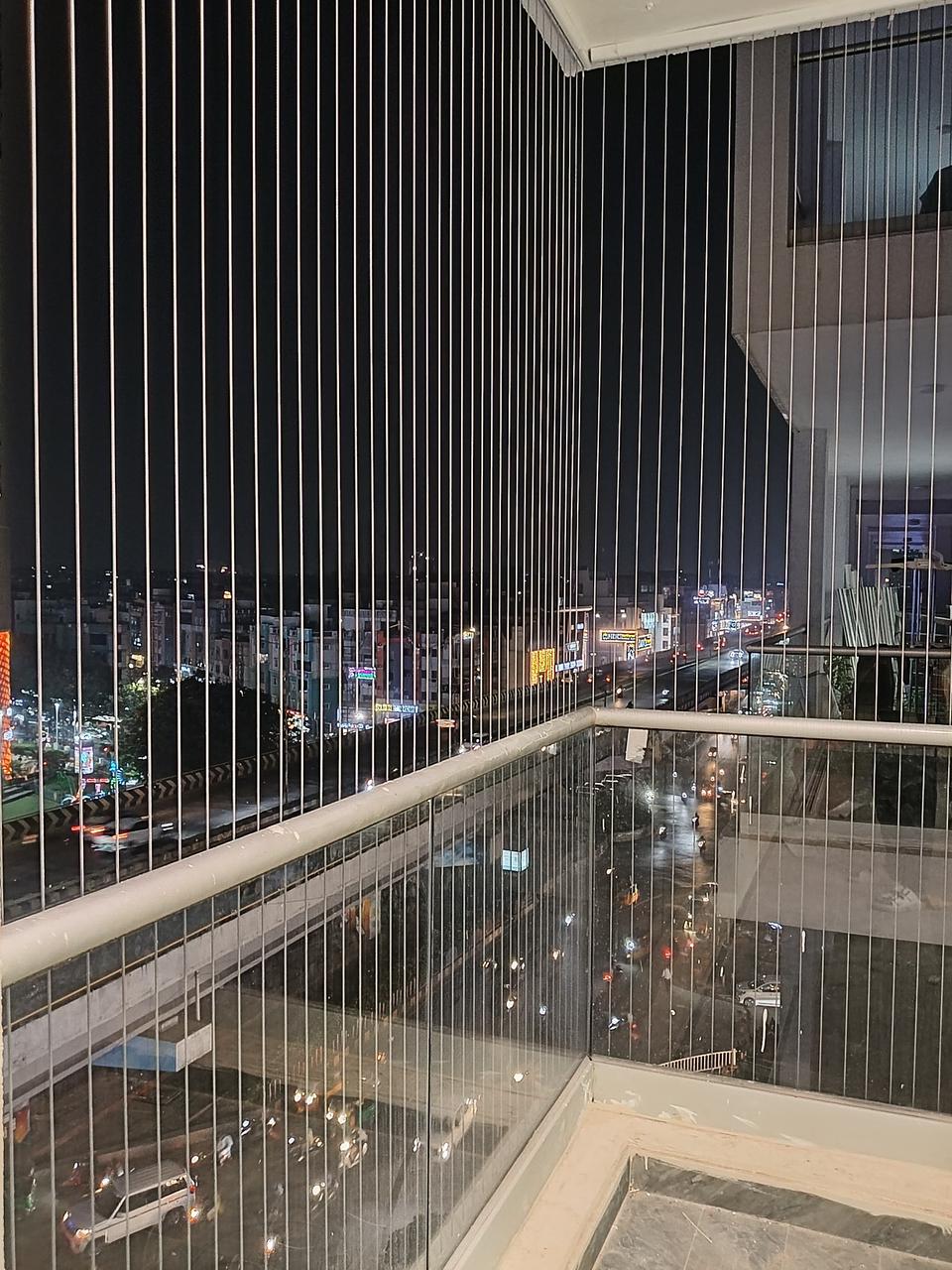
Invisible grill installation on a high-rise apartment balcony in Chennai
Chennai's skyline has changed fast. Corridors like OMR, GST Road, and Porur now have apartment towers that didn't exist a decade ago, and established areas like Velachery, Adyar, and Anna Nagar have seen a steady wave of redevelopment into taller buildings. With that shift, one safety decision comes up constantly for new apartment owners: what to install on an open balcony that's now eight, twelve, or twenty floors up.
Invisible grills have become the default answer for a lot of these homes — but installing them on a high floor isn't quite the same as a ground-floor independent house. This checklist walks through what's actually different, and what to confirm before you commit.
Why High-Rise Apartments Need a Different Approach
Three things change once you're several floors up:
- Wind load increases significantly with height — a balcony on the 15th floor experiences far more consistent wind pressure than one at ground level, which affects how cables should be tensioned and anchored.
- Building approval processes tend to be more involved — most high-rises are managed by a Resident Welfare Association (RWA) or facility management company with rules about what can be drilled or altered on the facade.
- Access and installation logistics differ — installers need proper safety equipment and sometimes building permissions just to reach the exterior of a high balcony safely.
None of this makes invisible grills a bad choice for high floors — if anything, the thin-cable design handles wind exposure better than a bulky iron grill would. But it does mean the installation needs a bit more planning than a single-storey home.
Where Chennai's Apartment Growth Is Concentrated
If you're apartment-hunting or have just moved in, these are the corridors where we're seeing the most demand for invisible grills right now:
- OMR (Old Mahabalipuram Road) — from Perungudi through Sholinganallur, driven by IT-sector apartment growth
- GST Road — Pallavaram and surrounding areas, with a mix of mid-rise and high-rise developments
- Velachery — one of the more established high-density residential zones
- Porur — newer apartment clusters along the outer ring road
- Anna Nagar & Adyar — older neighbourhoods undergoing redevelopment into taller buildings
If you're in one of these areas and considering invisible grills, you're far from alone — the demand pattern we see closely tracks these same corridors.
Your Pre-Installation Checklist
Before you book an installer, run through these points:
- Check your society's facade guidelines. Some RWAs restrict visible alterations to balconies — confirm invisible grills are permitted before booking.
- Confirm the floor height with your installer. Higher floors may need thicker wire (3mm rather than 2.5mm) to handle wind load safely.
- Ask whether drilling is required. Some societies restrict drilling into the exterior facade — clarify what anchoring method will be used.
- Ask about access arrangements. For very high floors, installers may need access to adjoining balconies or safety harness equipment — this should be planned in advance.
- Get the warranty in writing. Confirm it explicitly covers your specific floor height and exposure conditions, not just a generic ground-floor warranty.
Wind Exposure on Upper Floors
Wind speed increases with height, and Chennai's coastal location means upper floors can experience notably stronger and more consistent gusts than the same building's lower floors. For invisible grills, this mainly affects two things: wire thickness and tension.
A 2.5mm wire that's perfectly adequate on a 3rd-floor balcony may benefit from being upgraded to 3mm on a 15th-floor balcony facing open wind exposure — particularly on units facing the coast directly or an open stretch without neighbouring buildings to break the wind. A good installer should ask about your floor and orientation before recommending a thickness, not apply the same spec to every job.
Getting Society or RWA Approval
Most Chennai apartment complexes require some form of approval before facade-facing work, even something as minor as an invisible grill installation. A few tips that speed this up:
- Ask your installer for a simple written scope of work (what's being installed, anchoring method, expected duration) to submit to your RWA
- Photos of similar completed installations in comparable buildings can help reassure a cautious management committee
- If your society has a preferred vendor list, check whether your chosen installer needs to be added to it before starting work
Getting this approval sorted before scheduling installation avoids delays on the day your installer is meant to arrive.
Considering Invisible Grills for a High-Rise Apartment?
We'll assess your floor height, orientation, and society requirements during a free site visit.
Get Free Quote →Questions to Ask Your Installer
Beyond the standard questions (steel grade, warranty, pricing), high-rise installations call for a few extra ones:
- "Have you installed on buildings this tall before, and can I see photos?"
- "What wire thickness do you recommend for my specific floor and orientation?"
- "Do you handle the RWA approval paperwork, or is that on me?"
- "What access equipment will your team use to reach my balcony safely?"
An installer with real high-rise experience across Chennai should answer all of these without hesitation.
Frequently Asked Questions
Living in a High-Rise? Let's Assess Your Balcony.
Get a free site visit — we'll check your floor height, orientation, and society requirements before recommending a spec.
Get Free Quote →